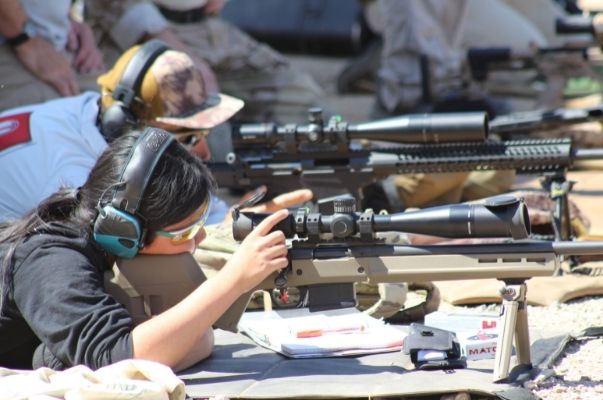
One of the stranger things about the firearms world is how much time many spend preparing our equipment and how little time they spend preparing themselves.
Many research firearms, compare ammunition, debate optics, experiment with holsters, and spend considerable money assembling exactly the equipment we think we’ll need if something ever goes wrong. There is nothing wrong with that. Good equipment matters, particularly when you are relying on it for personal protection.
The problem comes when we put the gun in the nightstand or holster and quietly convince ourselves that we have made a plan.
We haven’t. We’ve bought a tool.
Equipment Gives You Capability
If you are relying on a firearm for personal protection, it should be reliable, appropriate for the job, and something you know how to operate well. But owning that firearm only gives you capability. It doesn’t tell you what to do when a problem develops.
Home defense is a good example. If you are awakened by something at two in the morning, the gun doesn’t tell you where your family is, whether you should move through the house or remain in a defensible location, who should call 911, or what lies behind the walls in the direction of a potential threat.
Those decisions have little to do with the firearm itself, but they may ultimately matter far more.
That’s the difference between owning equipment and having a plan.
A Good Plan Creates Options
The same principle applies outside the home.
Carrying a firearm gives you another defensive option, but it does not automatically provide the judgment necessary to know when that option is appropriate. In fact, I have long believed that carrying a firearm should make us more willing to walk away from unnecessary confrontations, not less.
If something begins developing in a parking lot, restaurant, or other public place, recognizing trouble early may allow you to leave, create distance, move your family somewhere safer, or simply avoid becoming involved in someone else’s problem.
None of that is particularly dramatic, which may be why it receives less attention than drawing and shooting. It is, however, often much more useful.
A good plan gives you choices while choices are still available.
Find the Holes Before You Need the Plan
This is one reason scenario-based training can be so valuable.
At C2 Tactical, our SIM room allows students to experience situations that change based on their actions. Instead of simply waiting for a target to appear, they have to interpret what’s happening, communicate, move when appropriate, and decide whether a firearm should become part of the solution at all.
That is when assumptions begin meeting reality. And when real training begins.
Something that seemed perfectly reasonable beforehand may become considerably more complicated when uncertainty, movement, communication, and time pressure enter the picture. Discovering that during training is useful. Discovering it during an actual emergency is considerably less so.
A plan does not need to predict everything that could happen. It simply needs to give you a better starting point than improvising everything when you’re already under stress.
The Bottom Line
A firearm can be an extraordinarily effective defensive tool, but it cannot make decisions for you. It does not know where your family is, what’s behind your target, whether you should intervene, or whether leaving is the better option. Those decisions belong to you.
So, choose good equipment, learn how to use it, and maintain the skills necessary to operate it well. Just don’t confuse possessing the tool with preparing for the problem.
At C2 Tactical, we believe preparedness begins long before anyone reaches for a firearm. Because your gun may be part of your plan. But your gun is not the plan.